
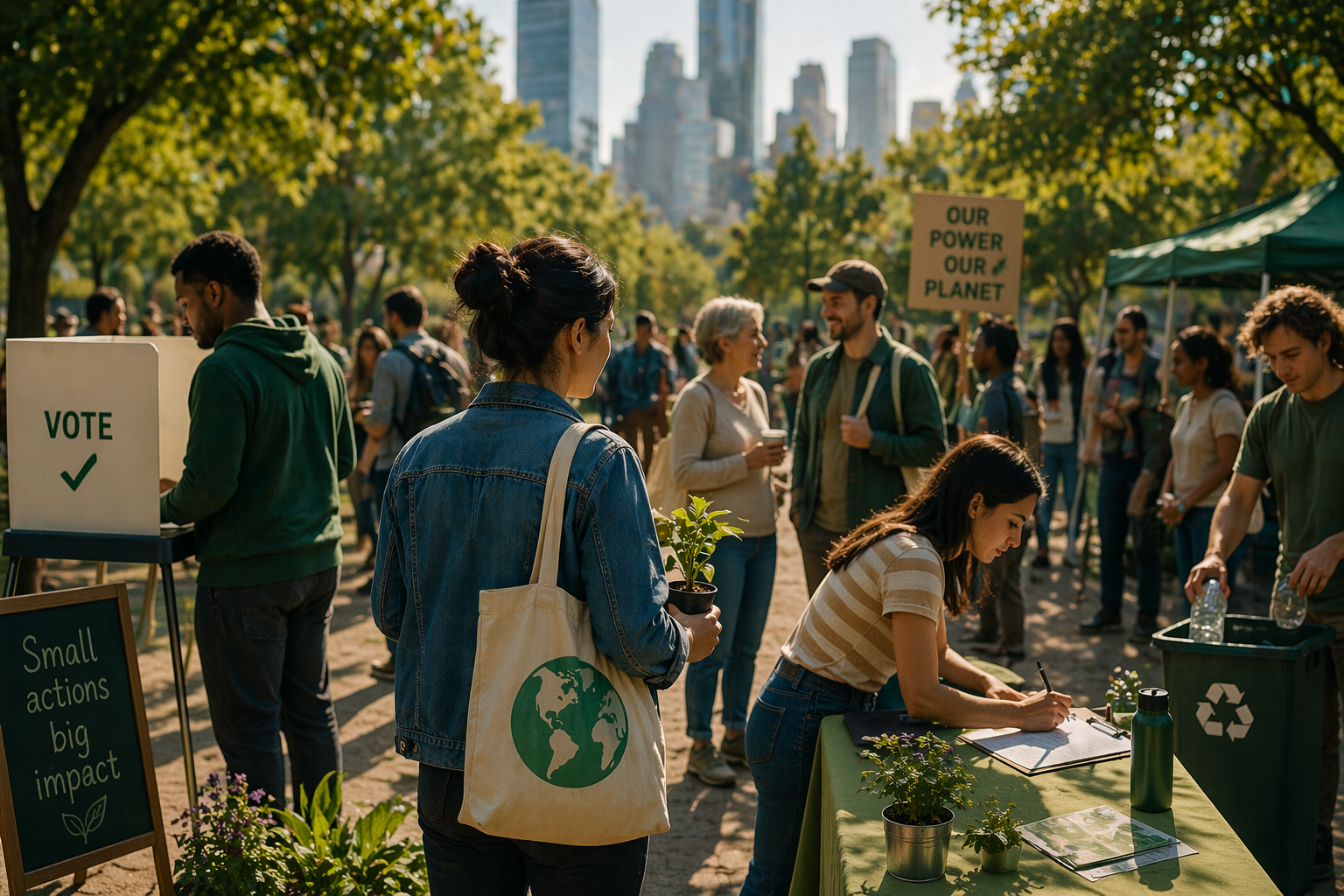

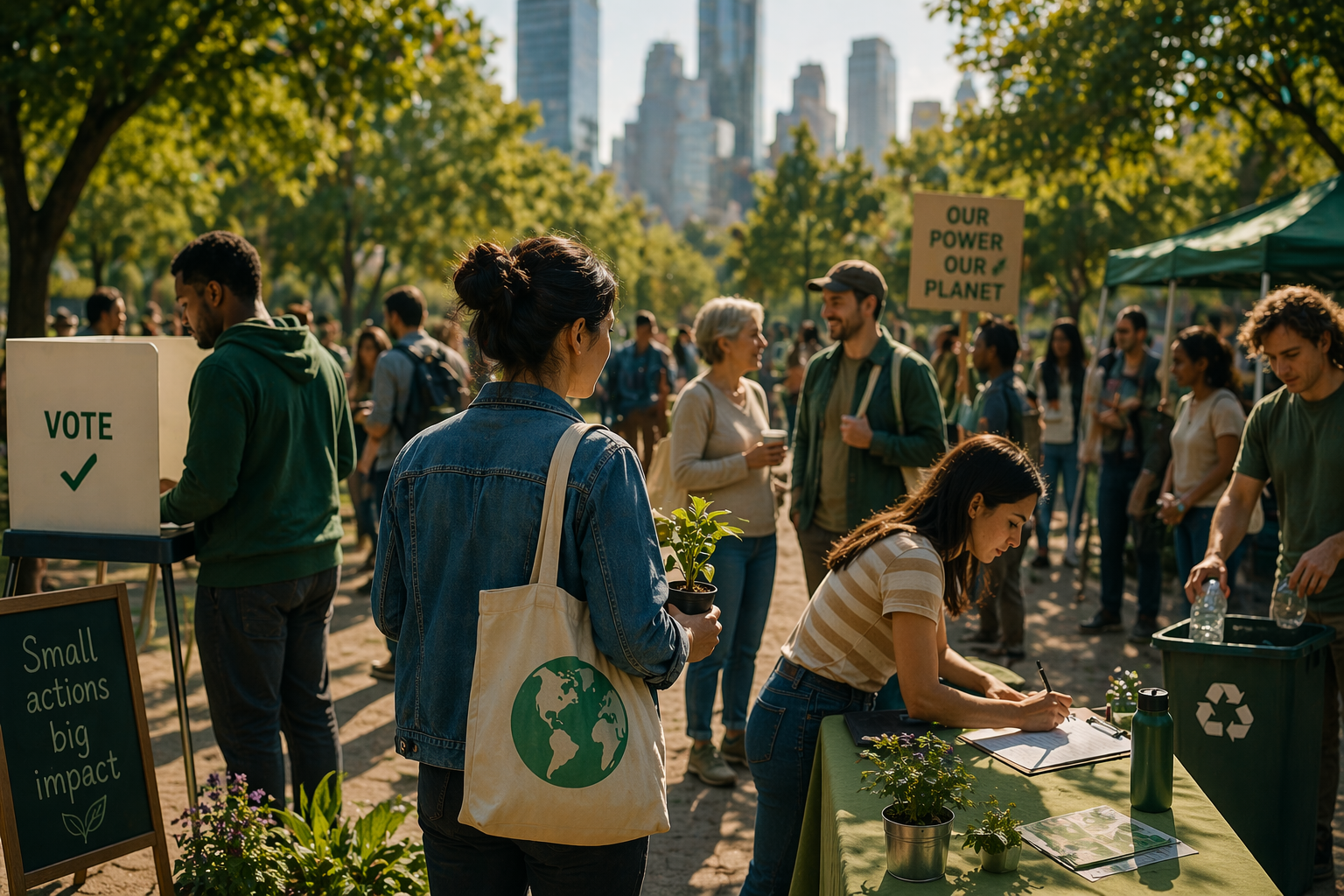
Earth Day 2026 carries a clear message: environmental progress doesn't depend on any single administration or election—it is sustained by the actions of ordinary people, communities, and families. This year's theme, Our Power, Our Planet, is an explicit call to civic engagement, and Americans are already responding.
One in five Americans voted on environmental issues
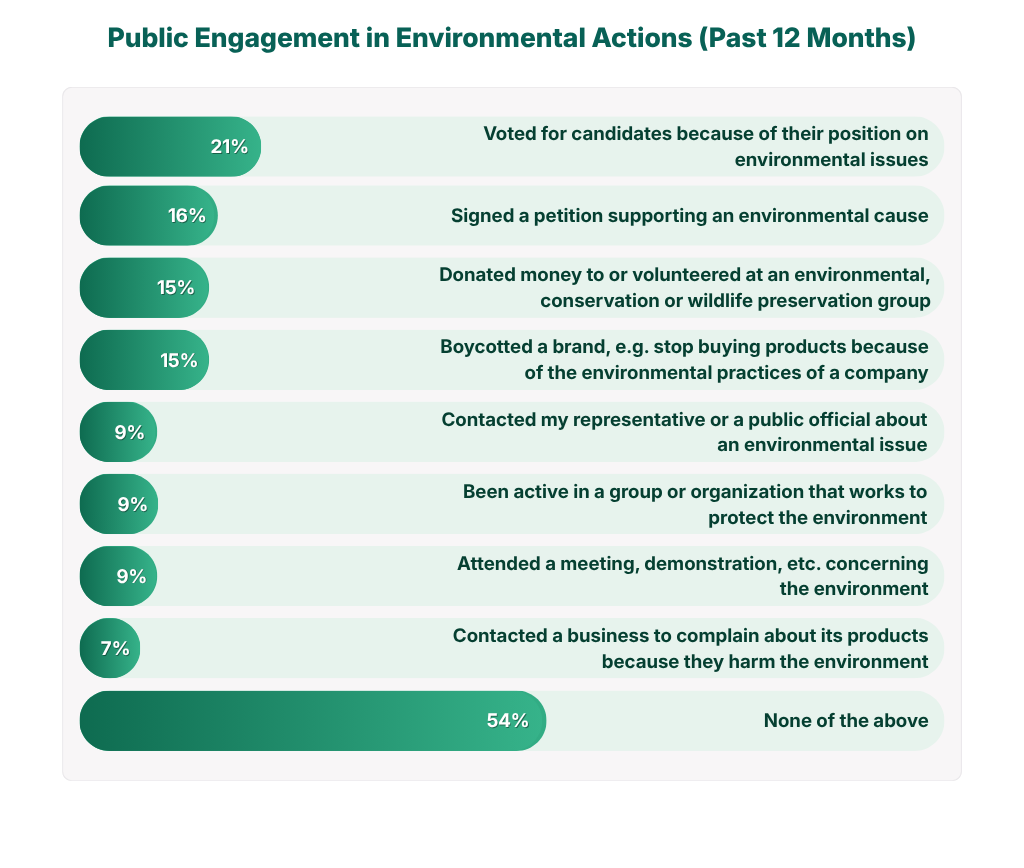
Voting on environmental issues is the most common form of active participation, cited by 21% in the previous 12 months. Signing a petition comes next at 16%, followed by donating to or volunteering with an environmental group and boycotting a brand, both at 15%. Fewer have taken more direct steps—contacting a representative, attending a demonstration, or joining an environmental organization, each at 9%.
The most powerful activist tool most people have is their wallet
But civic action is only part of the picture. For most Americans, environmental activism also plays out every day at the shelf. Forty-three percent say they have avoided buying products from companies they learned did not have environmentally responsible practices.That everyday wallet activism may be less visible than a demonstration or a petition—but it is far more widely practiced, and it is aimed directly at brands.
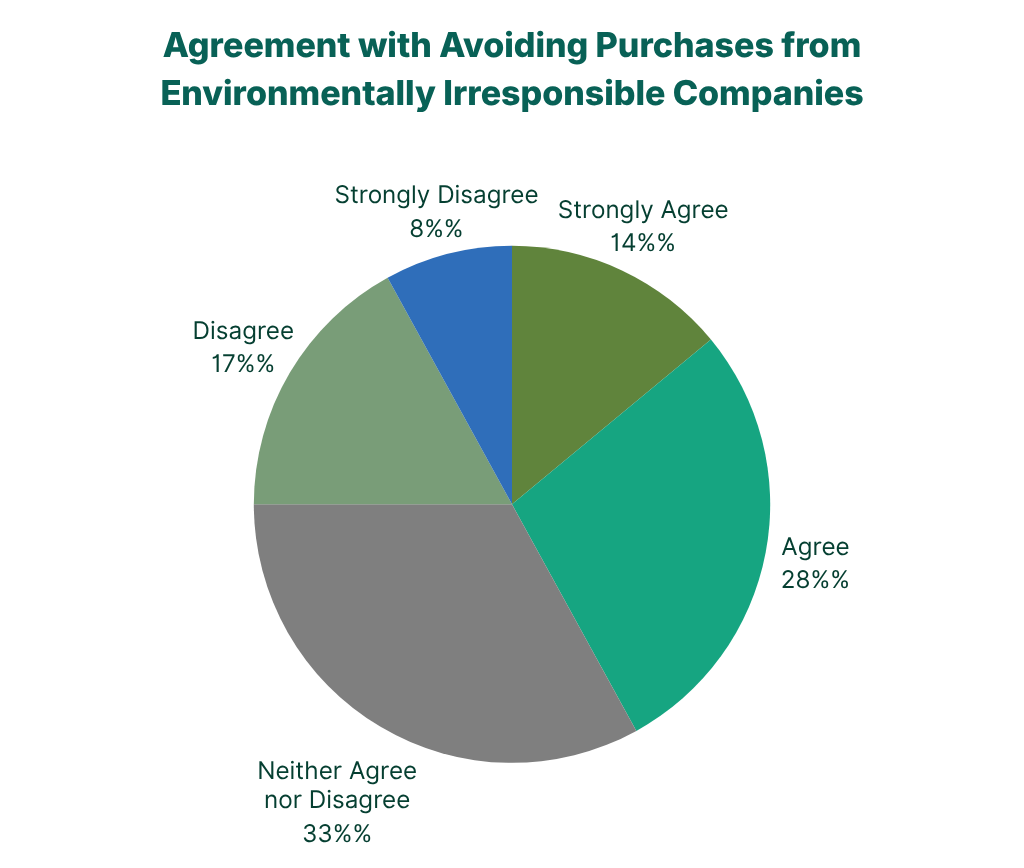
That is where the opportunity lies for companies. Earth Day's theme—Our Power, Our Planet—is a reminder that individual action, however imperfect, adds up. Brands that make their environmental practices visible, credible, and easy to act on become part of that collective momentum rather than a target of it. Enabling consumers to feel that choosing your product is itself an act of environmental engagement is not just good marketing—on Earth Day 2026, it is the whole point.
What's the Takeaway?
Consumer environmental activism is real and growing—expressed through votes, petitions, and increasingly through everyday purchase decisions. For brands, that makes environmental responsibility a direct business lever, not just a reputational one. The companies that make it easy for consumers to act on their values will increasingly be the ones they choose.