
Plastic Free Month puts a spotlight on one of the most visible tools brands have deployed in response to consumer concern about packaging waste: recycled content. For brands that have invested in recycled materials, the question is not just whether consumers notice, but whether they believe it.
One in three consumers is skeptical of recycled content claims. Brands that rely on a label alone are unlikely to change that.
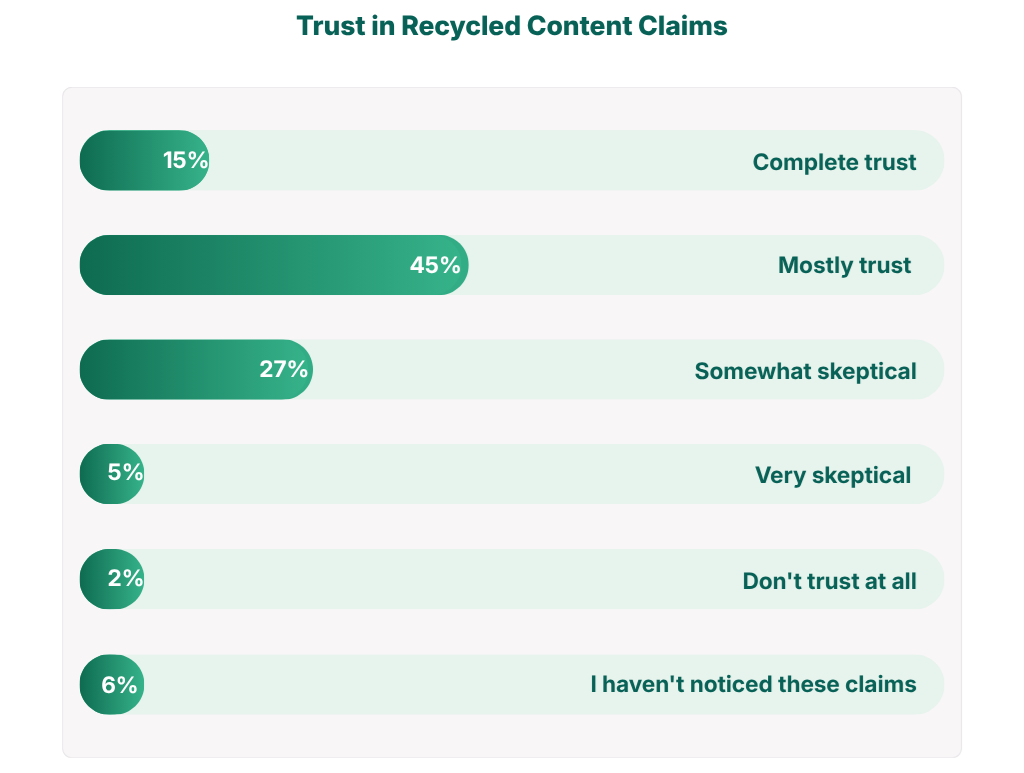
On the question of belief, the data is mixed. Sixty percent of consumers say they trust recycled content claims, but complete trust is less common, held by only 15%. Twenty-seven percent are somewhat skeptical and a further 7% are very skeptical or don't trust these claims at all. That's a substantial share of consumers who have largely discounted the recycled content message before they even reach the point of sale.
On the other hand, packaging made of recycled materials garners a meaningfully positive response. Forty-one percent say it makes them feel better about their purchase and 32% say it makes them trust the brand more. One in four say it influences which product they buy, a notable finding given how many factors shape purchase decisions at the point of sale.
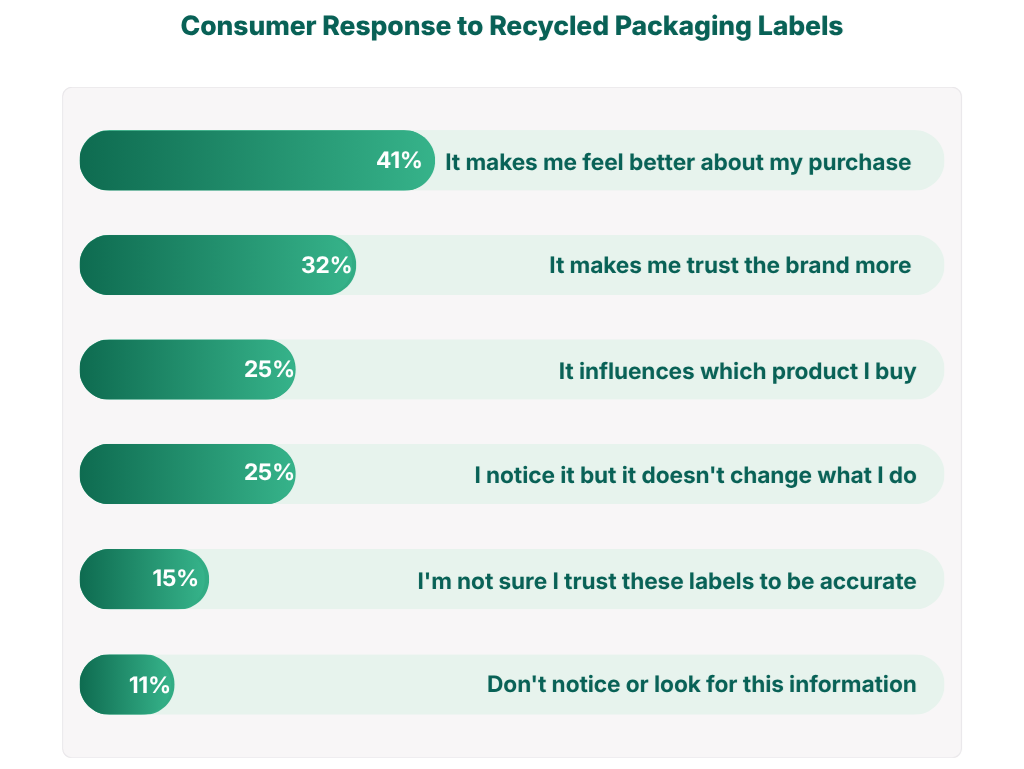
Not all consumers respond the same way. Twenty-five percent notice recycled content labels but say it doesn't change what they do, and 15% say they don't trust these labels to be accurate. Eleven percent don't notice them at all. These numbers sit alongside the positive responses and point to the consumers that recycled content message isn't fully reaching.
Recycled content labels generate real positive responses — the opportunity is making sure more consumers believe what they say.
For brands, the more significant opportunity may be with the 27% of consumers who are somewhat skeptical. Greater transparency about what recycled means in a specific product context, third party verification, and concrete information about actual environmental impact are more likely to address that skepticism and bring these consumers closer to the brand.
What's the Takeaway?
Recycled content resonates positively with a significant share of consumers, but trust varies widely. Brands that go beyond the label with transparency and verification have the most to gain, particularly among the substantial share of consumers who are currently skeptical of these claims.