


Sustainability is a real purchase driver — just not always the loudest one
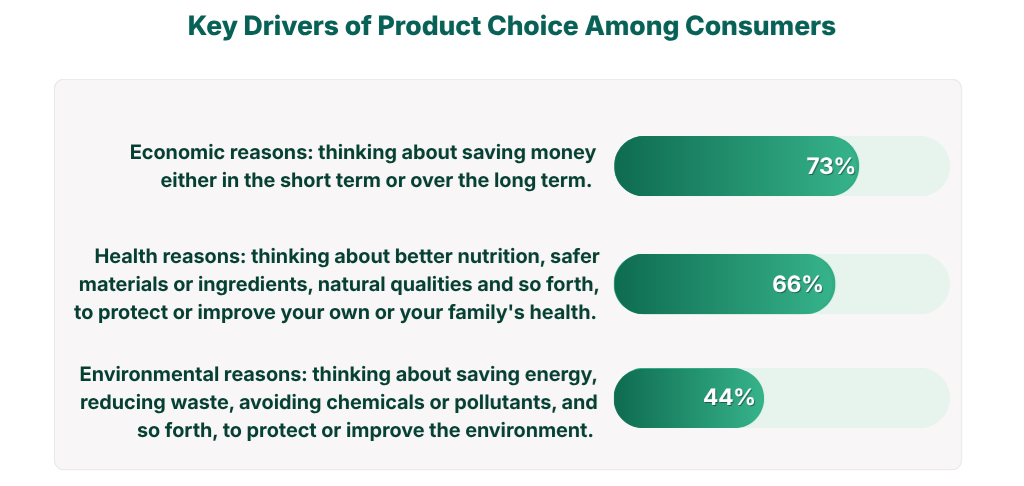
Environmental reasons play a role in purchase decisions for the vast majority of Americans — but it is not always the leading role. When asked how often health, environmental, and economic considerations drive their choices, economics leads at 73% (always or usually), health follows closely at 66%, and environmental reasons come in at 44%. Environmental motivation is real and widespread, but it competes — and doesn't always win.
Food and cleaning products: where green is becoming the baseline, not the bonus
Where it does win, however, is telling. Among eco-conscious consumers, food and grocery items top the list of categories where sustainable options matter most, cited by nearly three in four (72%). Household cleaning supplies (57%), personal care products (56%), and health and wellness products (52%) follow closely behind. These are the categories that share a common thread — they are high frequency, they enter the home, and they come into direct contact with the body. Environmental preference, it turns out, tracks closely with personal exposure
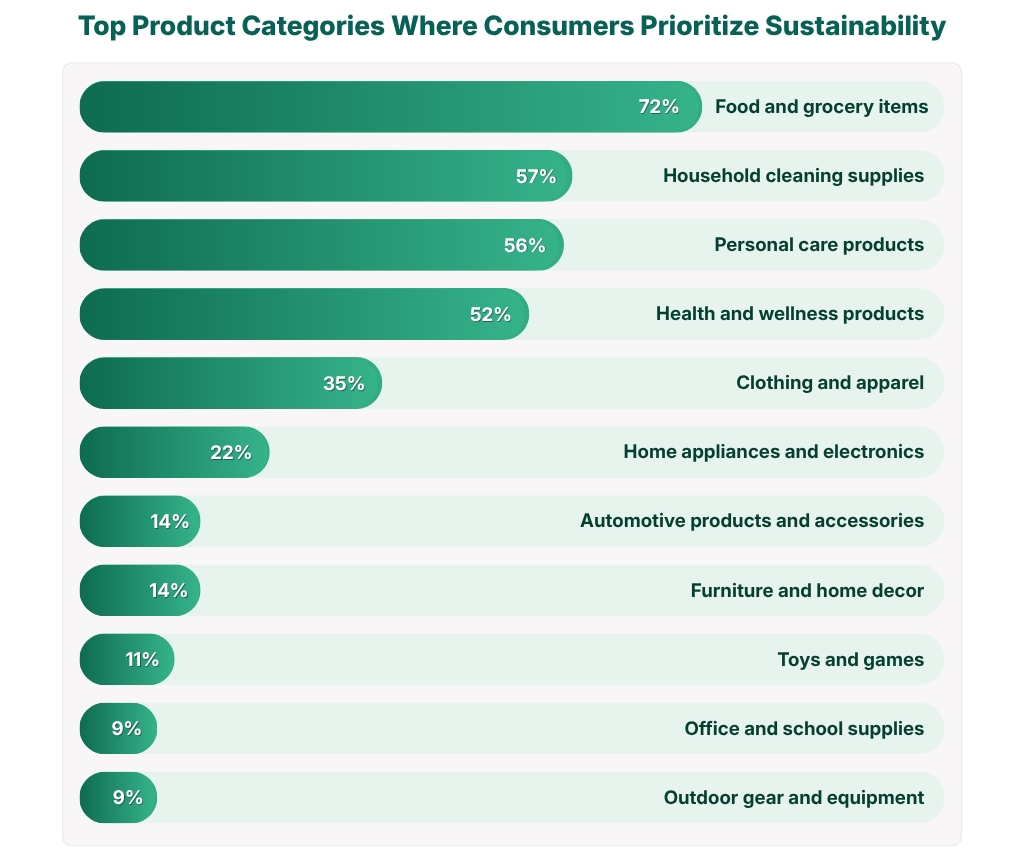
Further down the list, clothing and apparel (35%) show meaningful but lower levels of sustainable priority, while furniture, automotive, and outdoor categories trail significantly — suggesting that sustainability is a stronger driver in everyday consumables than in considered or occasional purchases. For brands, the pattern is both a map and a signal. Consumers are not applying sustainable thinking uniformly across everything they buy — they are concentrating it where they feel the most direct personal stake. That means the categories at the top of the list face the highest expectations and the greatest opportunity: sustainable credentials in food, cleaning, and personal care are not a differentiator so much as an emerging baseline.
What's the Takeaway?
Sustainable shopping is not an all-or-nothing proposition for most consumers — it is a set of deliberate priorities concentrated in the categories that feel most personal. Brands in food, household cleaning, and personal care operate in the highest-expectation tier. Meeting that expectation credibly is increasingly the price of consideration, not a reason to celebrate.