



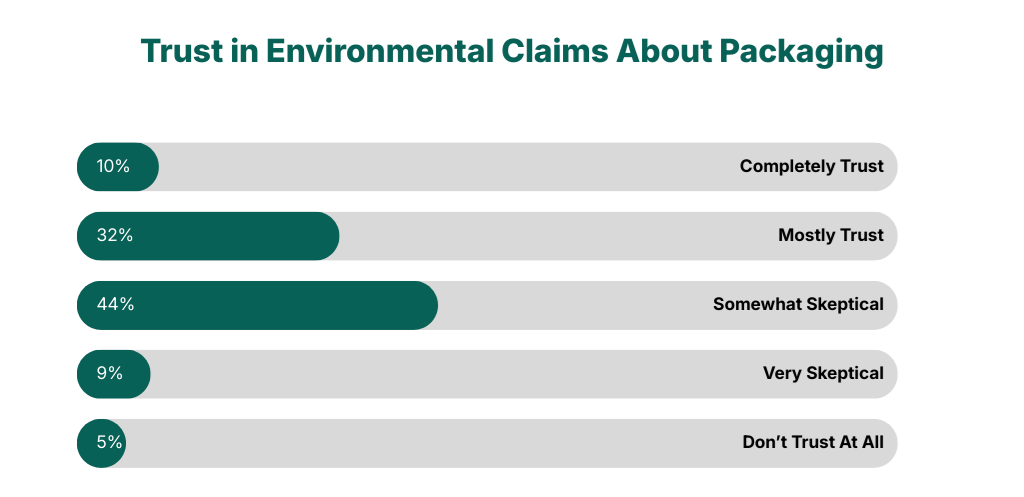
More consumers distrust green claims (57%) than trust them—creating a white space for brands that can prove their commitments
President's Day honors Lincoln's legacy of integrity—a principle that's become a competitive advantage in environmental marketing. While "43% of consumers trust companies' environmental packaging claims mostly or completely", the remaining 57% are waiting for brands to earn their confidence with proof, not just promises. That gap represents an opportunity: brands that verify their claims can capture skeptical shoppers competitors leave behind.
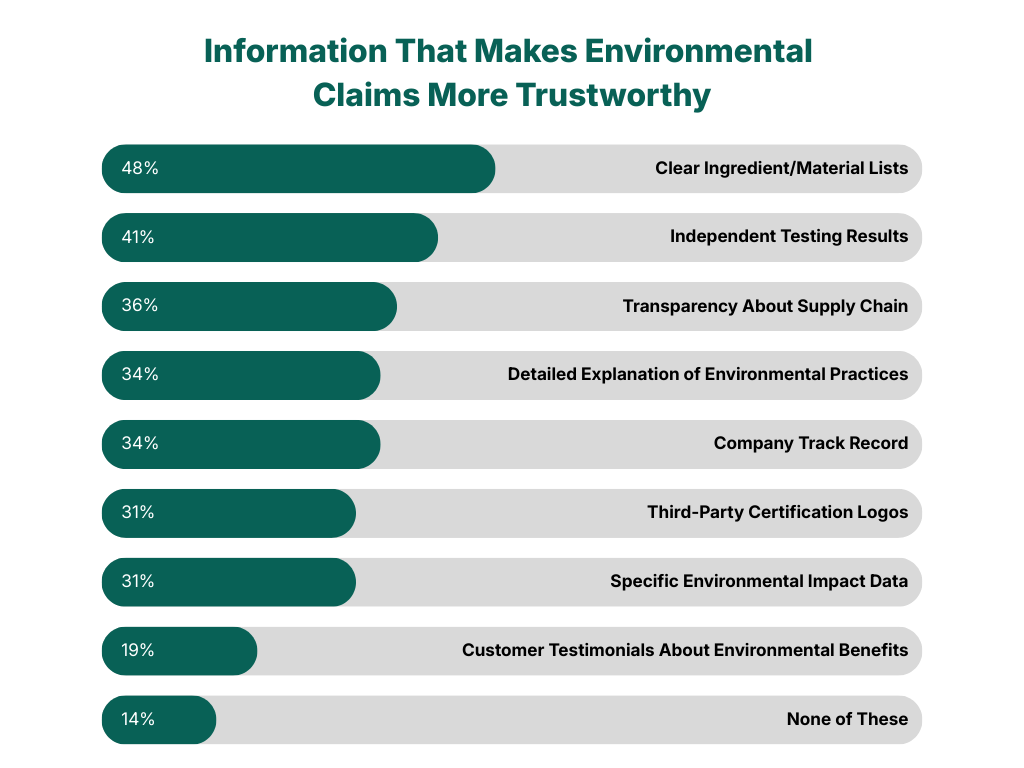
Consumers aren't asking for marketing—they're asking for evidence. Nearly half (48%) want clear ingredient lists, while 41% want independent testing results
The pathway to trust is clear and concrete. When asked what would make environmental claims more believable, consumers specified what they need: "48% want clear ingredient/material lists, 41% want independent testing results, 36% want supply chain transparency, and 31% want third-party certification logos and specific environmental impact data". These aren't abstract requests—they're a roadmap for brands ready to differentiate through transparency.
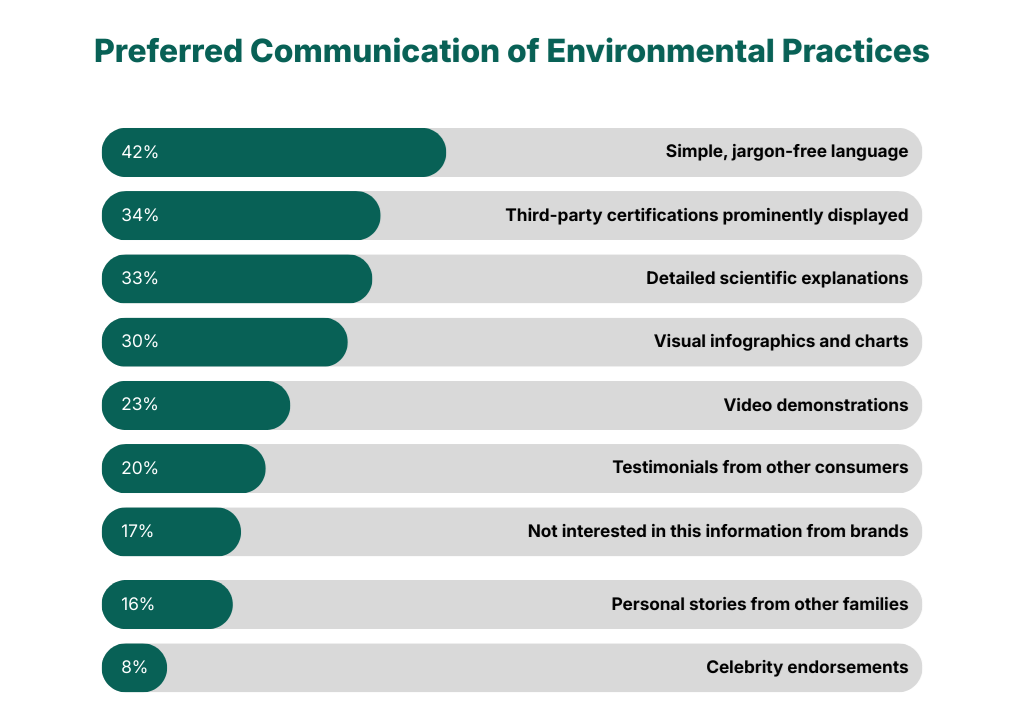
The credibility formula: plain language + visible certifications + measurable outcomes. 42% want jargon-free language and 34% want certifications prominently displayed
Communication format amplifies credibility when paired with substance. "42% want simple, jargon-free language, 34% want third-party certifications prominently displayed, 33% want detailed scientific explanations, and 30% want visual infographics". The winning formula combines accessible language with verifiable proof—plain explanations anchored by recognized seals and measurable outcomes.

The opportunity for brands is to lead with what's measurable and validated: carbon reduction figures, certified materials, test results from named labs. Make third-party marks visible and the underlying data accessible. Replace vague modifiers (eco-friendly, sustainable, green) with specific attributes (30% recycled content, FSC-certified, Marine Stewardship Council approved) and link to documentation. Each verified claim moves a skeptical consumer closer to purchase.
Lincoln's standard—"I am not bound to win, but I am bound to be true"—offers a growth strategy. Brands that treat environmental claims as auditable commitments—backed by data, certified by credible bodies, communicated clearly—build trust that compounds into loyalty, market share, and pricing power.

The 57% of consumers who approach environmental claims with skepticism aren't lost—they're available to brands willing to prove their commitments. Transparency and verification aren't compliance exercises; they're conversion strategies.
Want to learn more? If you would like to have actionable data, available at your fingertips 24/7/365, a seat license to our Interactive Data Portal might be right for you. Please contact EcoFocus today to set up a no cost, no obligation demo. We can show you how our data will help you decode the purpose driven market anytime, wherever you have internet access.