


For every consumer who trusts a green claim, another one doubts it
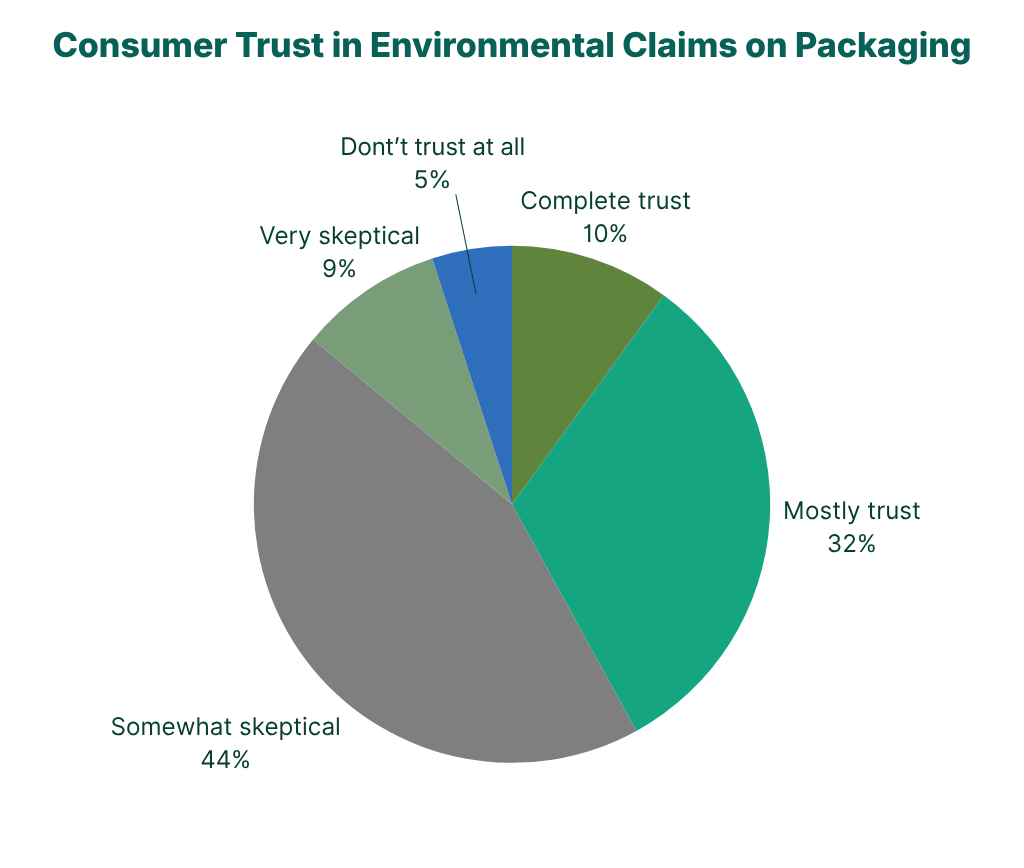
When companies make environmental claims about their packaging, they are speaking to an audience that is more skeptical than trusting. Only 43% of Americans say they completely or mostly trust such claims — while 44% describe themselves as somewhat skeptical and a further 14% are actively distrustful. For every consumer who takes an environmental claim at face value, there is roughly another who greets it with doubt. That is the environment in which every green claim lands today.
Consumers don't want green stories — they want green proof
The path to credibility is clear — and it runs through specificity and independence, not brand voice. When asked what information would make them more likely to trust environmental claims, consumers point overwhelmingly to verifiable, third-party sources over anything a company says about itself. Clear ingredient and material lists top the list at 48%, followed by independent testing results at 41%, and transparency about supply chain at 36%. Detailed explanations of environmental practices and company track record each come in at 34%.
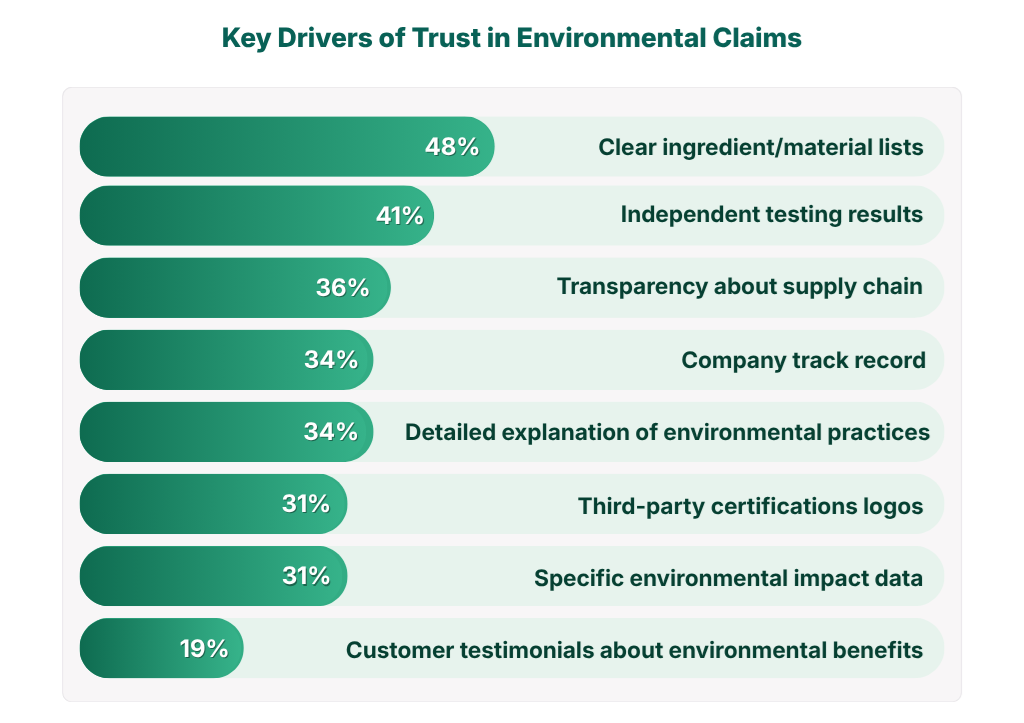
At the bottom of the trust-building list sits customer testimonials at just 19% — suggesting that peer validation carries far less weight in this context than hard, verifiable evidence. Consumers are not looking for reassurance from other shoppers; they are looking for proof from independent sources.
The implications for brands are straightforward. In a near-skeptical environment, vague sustainability language and self-reported claims are not just ineffective — they may actively reinforce doubt. The brands that will earn trust are those that lead with specifics: what the product is made of, how it was tested, who verified it, and what the supply chain looks like.
What's the Takeaway?
Greenwashing skepticism is now the default consumer posture. For brands, that means the bar for credible environmental communication has permanently risen. Claims need to be specific, independently verifiable, and grounded in material facts — not aspirational language. The companies that meet that bar will earn trust; those that don't will deepen the skepticism that is already working against them.