

A brand that has committed to cutting emissions and conserving water may also be adding AI to its customer service, marketing, and operations. Each of those AI tools runs on data centers that draw large amounts of electricity, use water for cooling, and depend on hardware built from mined minerals.
For these brands, AI adds to the impacts their commitments are meant to reduce. So how concerned are consumers about AI’s environmental footprint, and how does that concern compare with their other worries about the technology?
Americans’ concerns about AI fall into two areas: its environmental impact and how honestly companies use it. Close to six in ten are extremely or very concerned that AI data centers are depleting local water supplies and that AI’s energy demands are contributing to climate change. Just as many are concerned that companies lack transparency about how they use AI impacting consumers and deliberately design AI systems to increase usage and costs to users.
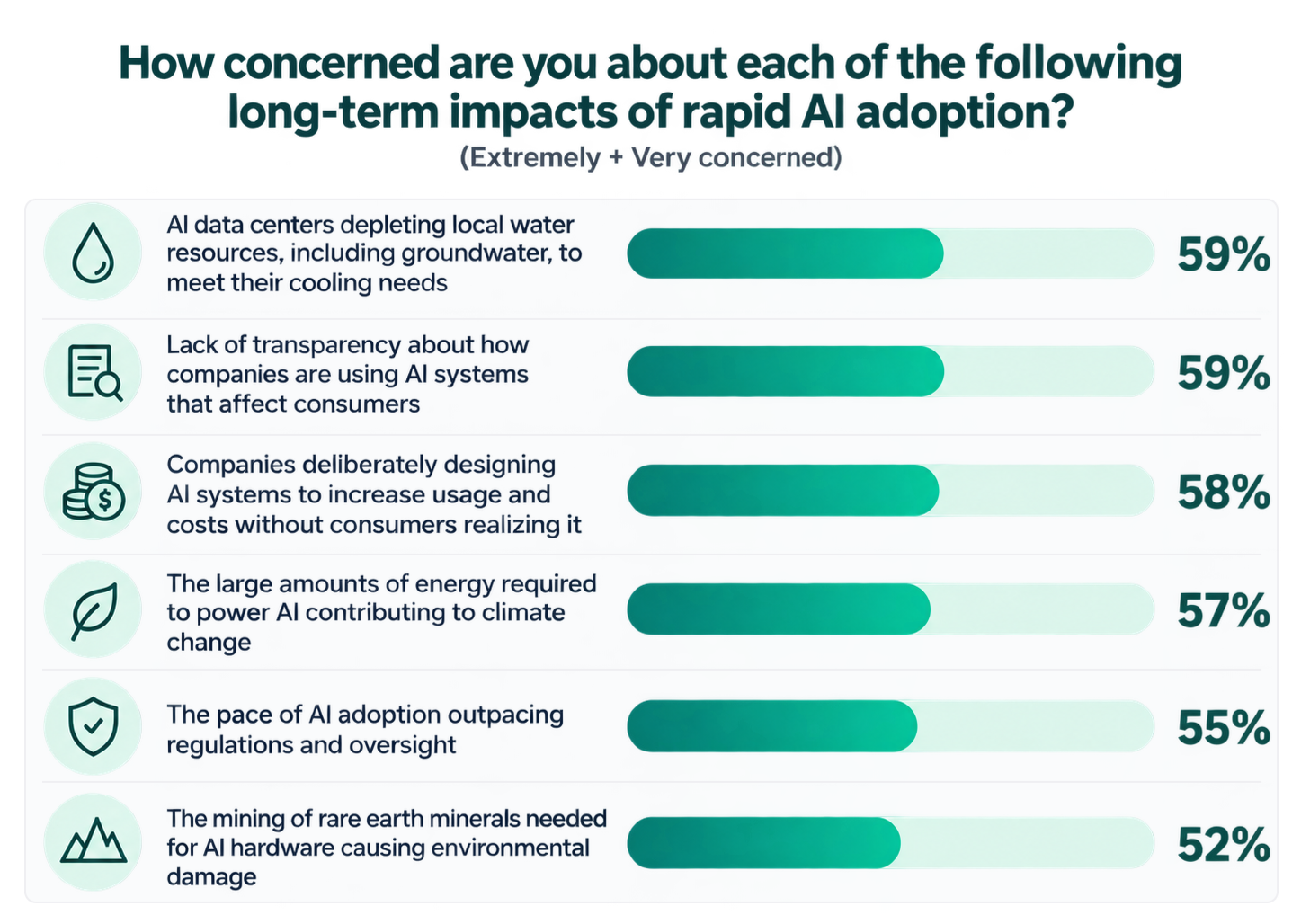
Two of Americans’ top concerns about AI, water and energy, are what corporate climate and water goals aim to reduce.
Many brands use AI through cloud providers and software vendors, which makes the energy, water, and materials behind those tools part of the brand’s own supply chain footprint. As AI use grows, so does that footprint, and a brand’s operations can move away from its commitments one AI tool at a time. With Americans as concerned about AI’s environmental impact as they are about corporate transparency, closing that gap is part of using AI responsibly.
What's the Takeaway?
Brands can bring AI into the sustainability reporting they do today by tracking its actual energy, emissions, and local water use, whether they measure it on their own servers or request it from AI vendors as they would from any other supplier. Reporting those figures lets brands address both areas of greatest consumer concern at once: AI’s environmental impact and how transparent companies are about using it. Brands that don’t include their AI use and impact in carbon, water, and sourcing commitments risk undermining their sustainability messaging with the consumers it is meant to reach.